
Hermes Agent Roundup: Hardware, Memory Layers, and Real-World Deployments
- hermes
- ai-agents
- self-hosted
- memory
- hardware
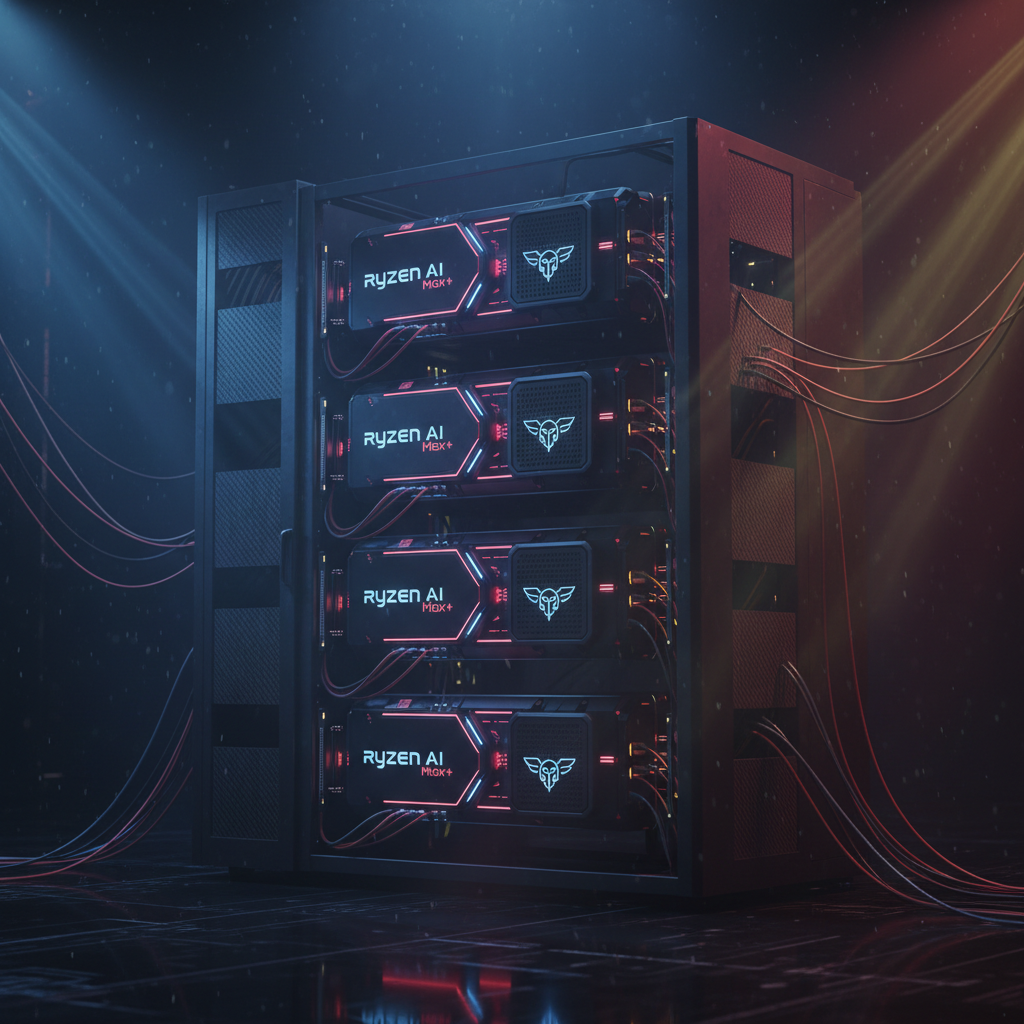
Hermes Agent dominated X discussions this week with four major themes: local hardware stacks, memory layers, unified control planes, and real-world deployments. Here are the top posts and what they reveal about the state of the ecosystem.
1. Local Hardware Stacks: 512GB of AI for $10,396
Key details:
- Hardware: 4 × Ryzen AI Max+ 395 boxes (128GB unified memory, 96GB shared GPU memory each)
- Cost: $2,599 per box → $10,396 total
- Savings: Eliminates $10–$20/day token rental costs
- Capacity: 512GB total memory
This post highlights the growing trend of local AI hardware stacks as a cost-effective alternative to cloud-based token rental. The math is compelling: at $15/day, the stack pays for itself in ~2 years - and then runs indefinitely.
2. Real-World Deployment: A Student’s $0/Month Business
How it works:
- Input: Backpack-mounted scanner captures raw data from every block walked
- Processing: Hermes Agent transforms raw data into sellable assets
- Cost: $0/month (runs on owned hardware)
- Key: No token rental fees - the entire pipeline runs locally
This deployment demonstrates Hermes Agent’s local-first architecture in action. The student’s business model is only possible because the agent runs on owned hardware, not rented tokens.
3. Memory Layers: Portable Long-Term Memory for Agents
Key features of the memory layer:
- Portability: Works across Claude Code, Codex, OpenClaw, Hermes, and more
- Local-first: No cloud dependency
- License: Apache 2.0
- Installation:
pip installand run
This post underscores the fragmentation in agent memory solutions and the need for portable, interoperable layers. The memory layer’s Apache 2.0 license makes it a strong candidate for integration into Hermes Agent’s plugin ecosystem.
4. Unified Control Plane: One UI for All Agents
Supported agents:
- OpenCode
- Hermes
- Claude Managed Agents
- Cursor
Features:
- Persistent memory
- Scheduling
- Team access
- Data control
This post highlights the growing need for unified control planes as users run multiple agent frameworks in parallel. A single UI for Hermes, Claude, and OpenCode reduces operational overhead and simplifies workflow coordination.
[^4]: Md Ismail Šojal. "The unified self-hosted Runtime-agnostic agent builder..."
5. Memory Write Approval: Hermes Agent’s New Feature
What’s new:
- Memory write approval: Users must explicitly approve memory writes
- Integration: Pairs with third-party memory layers like Total Recall
- Learning curve: Hands-on experience with agent harnesses, memory management, and context bloat
This feature addresses a critical trust gap in agent memory systems. By requiring explicit approval for memory writes, Hermes Agent gives users finer control over what gets stored and when.
[^5]: Alex C. "@NousResearch Hermes-agent just added memory write approval..."
Themes
-
Local hardware is the new cloud. The cost savings and control of local stacks are driving adoption. Hermes Agent’s local-first design makes it a natural fit for these deployments.
-
Memory is the bottleneck. Portable, interoperable memory layers are emerging to address fragmentation. Hermes Agent’s new memory write approval feature is a step toward more transparent memory management.
-
Unified control planes are table stakes. Users running multiple agent frameworks need a single UI for coordination. Hermes Agent’s plugin system is well-positioned to integrate with these control planes.
-
Real-world deployments are happening. From backpack scanners to server racks, Hermes Agent is being used in production today - not just in demos.
Follow These Builders
- @gippp69 - Local AI hardware stacks
- @N01ennn - Real-world Hermes Agent deployments
- @Aria_Nawi - Memory layers for agents
- @0x0SojalSec - Unified agent control planes
- @alexcovo_eth - Hermes Agent power user